How Casino Films Turn Access Into Entertainment
Casino films turn access into entertainment through staged invitations and private rooms. Learn to read how these choices shape status, suspense, and character.
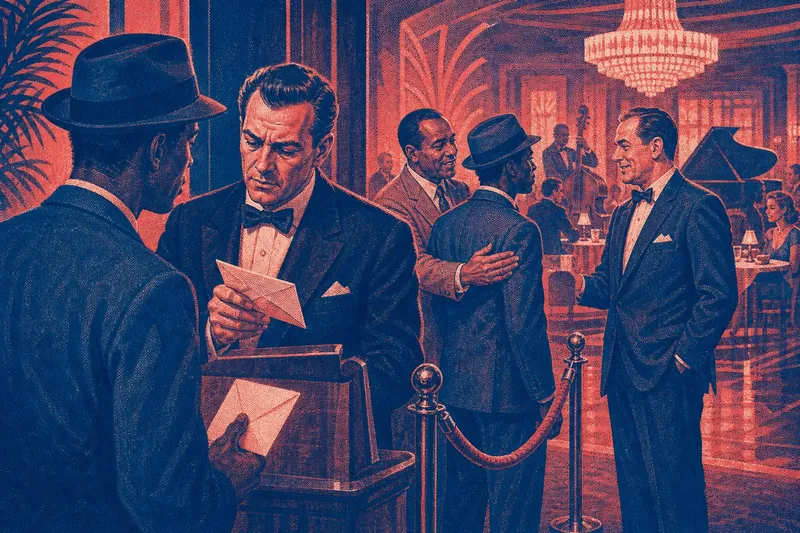
The most common mistake in reading casino films is treating an invitation as a prop rather than a plot device. A name on a card, a whispered introduction, or a host’s discreet nod can shift a scene from public spectacle to private performance. The payoff is a clearer sense of what the film wants access to mean.
In screen stories, the invitation often works like a backstage pass: the paper matters less than the person who recognizes it. A character may gain entry to a room, but also to a new social role, a hidden conversation, or a more consequential version of the evening.
Invitations as props
Look at how a film introduces a credential. It may be displayed in a close shot, handled by a character who knows its significance, or mentioned only after someone has already been welcomed. Each choice gives the object a different job. A prominent close-up asks viewers to remember it; a casual exchange suggests that the important currency is the relationship behind it.
The object can also make status visible without a speech explaining the hierarchy. A guest who produces a card confidently seems familiar with the ritual; one who waits for instructions appears to be learning it. These are character cues created by performance and staging, not reliable descriptions of actual venue procedures.
Ritual and status
Casino films often give access a small ceremony: a name is recognized, a host makes an introduction, or a familiar face receives a warmer greeting than a stranger. The ritual lets the audience see social distinctions in action. It can make status look effortless, earned, inherited, or contested, depending on who performs the recognition.
Say you are reading an invented scene in which a jazz singer arrives with a plain envelope. The host reads the note, recognizes the signature, and introduces the singer to a club owner; the expected observable result is that the signature, rather than the envelope’s appearance, carries the scene’s weight. If the host ignores the note and responds only to the singer’s fame, the film shifts the source of access from private sponsorship to public reputation.
Performance behind access
Recognition is a performance shared by the person seeking entry and the person granting it. The guest may act as though the invitation is ordinary, while the host signals that it is exceptional. A pause, a change in address, or a carefully timed introduction can show the audience that the relationship has changed before the characters explain it.
This is one reason access scenes can carry more than one dramatic purpose. They may introduce a patron, establish a rivalry, or give a character a chance to conceal how much they want to be accepted. The audience watches not just who gets in, but who performs indifference convincingly.
What does an invitation reveal?
Why show a card or note?
A visible credential gives viewers an object to connect with a decision. If someone examines it, the scene makes recognition part of the action; if it remains unseen, the relationship or reputation may matter more.
What does a personal introduction signal?
An introduction can make access depend on a relationship rather than a document. If the host names the sponsor, that person’s influence enters the scene; if the sponsor stays unnamed, the film preserves uncertainty.
How does a guest’s behavior shape status?
Confidence, hesitation, and practiced familiarity can suggest how a character understands the room. If the guest follows the ritual without prompting, the scene presents them as an insider; if they wait for direction, it emphasizes their unfamiliarity.
Can a film show how every casino operates?
No single scene establishes a universal practice across venues, eras, or communities. Keep interpretations tied to the fictional setting and describe the scene as a screen convention when the film offers no broader context.
A scene, read closely
Imagine an invented film set at the fictional Blue Lantern casino. A visiting pianist arrives with one folded invitation and no named sponsor. First, the host reads the invitation but does not recognize the signature. Next, the pianist mentions a local bandleader, and the host asks that person to join them. Finally, the bandleader greets the pianist by name, and the host introduces both to the lounge owner.
The starting inputs are one invitation, one unrecognized signature, and one named bandleader. The sequence makes personal recognition the deciding factor: the invitation starts the exchange, but the introduction changes the pianist’s standing. If the bandleader never arrived, the host’s response would remain unresolved; the film would show a credential without showing whether anyone accepts its authority.
Access details to track
Note what the scene makes visible before deciding what it implies. For each observation, choose the narrower reading supported by the action:
- Observe whether a character displays a card or note; if someone reads it, treat the document as part of the decision, otherwise note that its contents remain unknown and focus on the response.
- Observe whether the host recognizes a name; if recognition is shown, connect access to familiarity, otherwise avoid assuming the name has influence.
- Observe whether a sponsor is named; if one is named, track that relationship as a source of access, otherwise keep the sponsor’s role unresolved.
- Observe whether the guest explains the credential; if an explanation changes the host’s response, treat the guest’s account as consequential, otherwise read the document or prior reputation as more prominent.
- Observe who makes the introduction; if a third character does, describe access as socially mediated, otherwise keep the focus on the guest and host.
- Observe whether the host’s manner changes; if it shifts after recognition, connect the change to the new information, otherwise avoid claiming that the exchange altered status.
Screen convention and setting
Invitations and introductions are useful film devices because they compress social information into visible action. A card can stand for access, a name for reputation, and an introduction for influence. That shorthand builds a dramatic world quickly, but it does not document the rules of a real venue.
For a precise reading, connect each interpretation to something the scene shows: a document examined, a name recognized, or an introduction made. Then distinguish the result from what remains unknown. A character may be welcomed without the film explaining whether the invitation, the sponsor, or some earlier reputation mattered most.
The last useful clue is often the person who carries the introduction forward. If the host repeats the guest’s name to someone else, recognition has entered the room; if the host returns to the invitation, the document remains the scene’s main credential. That small choice shows what the film treats as portable: a piece of paper, or a relationship.