How the Casino Became a Story Setting
How the casino became a story setting: trace its shift from a public gambling venue to a literary device for chance, status, secrecy, and character.
The most common mistake in asking how the casino became a story setting is to treat it as decoration: green felt, bright lights, a hand of cards. That costs a story its useful pressure. A casino makes chance visible and gives strangers a shared occasion to display judgment, appetite, embarrassment, or restraint.
Venice’s public gambling house
The Venetian Ridotto offers an early point of comparison, not a universal origin story. Accounts commonly place the Republic’s regulated gambling house in the Palazzo Dandolo during the seventeenth century, where public play took place within civic rules. For a historically precise account, details about its operation and dates should be checked against specialist sources; the broader literary point does not depend on claiming that every later casino descended from it.
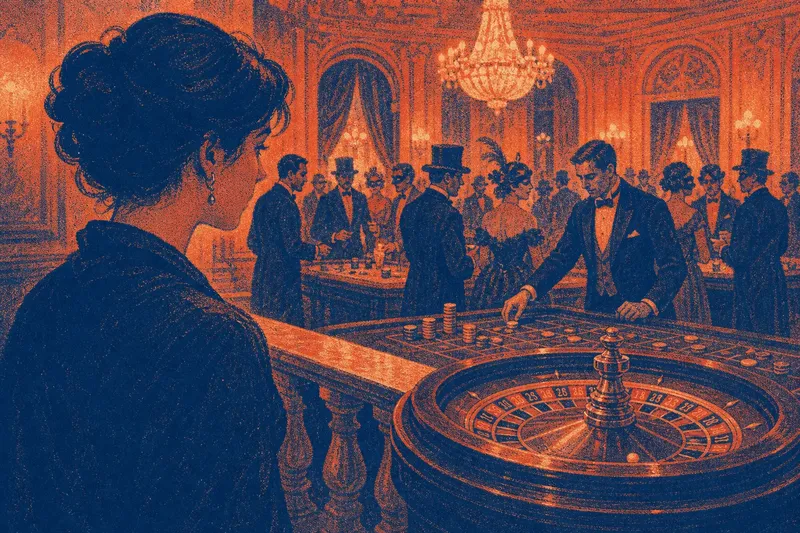
Its association with Carnival gives writers a suggestive combination: public gathering and masked identity. A character can enter a social space where other people are present, yet not entirely legible. That tension is more useful than treating the Ridotto as a quaint ancestor of every modern gaming floor.
Resorts and literary pressure
As European resort casinos became recognizable settings, fiction could use them to join gambling with travel, leisure, and social standing. The Casino de Monte-Carlo is one prominent example of that resort image, but a named real venue and a fictional casino are not interchangeable. A novel may borrow the atmosphere of a place while reshaping its geography, customs, and events to serve its characters.
Fyodor Dostoevsky’s The Gambler, published in 1866, centers on roulette in the fictional resort town of Roulettenburg. The invented setting concentrates the novel’s attention on compulsion, money, and unstable relationships. It should not be read as a report on Monte Carlo or as a documentary portrait of a particular casino.
Ian Fleming’s Casino Royale, published in 1953, uses a fictional French casino and a card game to stage espionage. Baccarat gives characters a public contest in which composure and concealed intent can matter as much as the cards. The room is not merely glamorous; it supplies a legible arena for watching people try not to reveal what they want.
What does a casino add?
Why do novels use casino scenes?
A casino brings characters together around an action with shared rules, even when they have no prior relationship. The game gives the scene a visible surface while the deeper conflict can concern money, pride, or attachment.
Is the casino always a symbol of luck?
No. A story may emphasize chance, but it can also use the venue to examine status, work, etiquette, or who feels entitled to belong. The details around the game determine which reading makes sense.
How does a casino scene create suspense?
A wager or decision can remain unresolved in public, making restraint and reaction visible to other characters. Suspense can also come from a person’s social risk: a loss of face may matter more to the scene than the outcome of the game.
Why bring a newcomer into the casino?
An unfamiliar character gives the reader a reason to learn the room’s customs and social codes. A newcomer’s questions can reveal those rules without turning the scene into a detached explanation.
Chance, status, and character
The casino setting developed in fiction less like a single historical procession than like a useful dramatic instrument, adapted to different subjects. The masked gathering, the resort visit, and the espionage game do not form neat stages that replace one another. Each makes a different kind of pressure available to a writer.
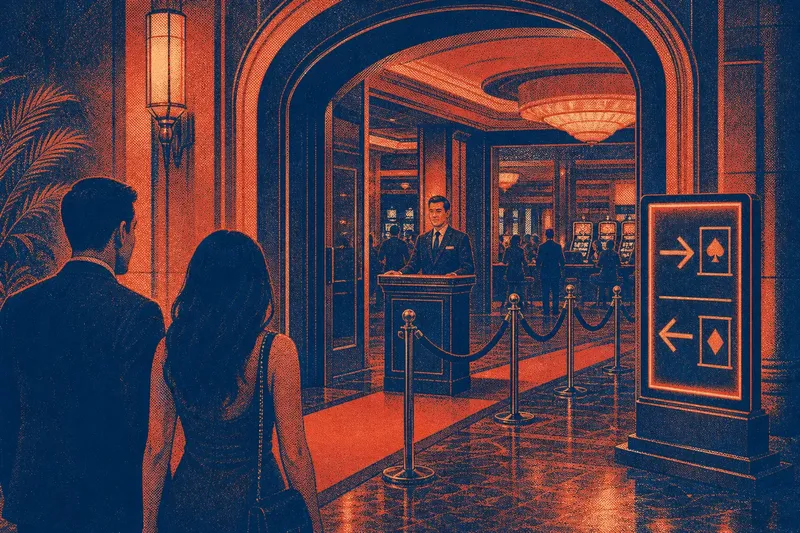
Consider an invented scene: Mara arrives at a fictional resort casino with a note from her brother asking her to meet a stranger at a roulette table. She recognizes neither the game’s etiquette nor the stranger, so she asks the attendant where visitors wait before approaching a table. The attendant points out the marked viewing area; Mara waits there and recognizes her brother’s distinctive coat among the people across the room. The observable change is that the scene’s immediate question shifts from whether she will gamble to why her brother has arrived before her.
This is the casino’s dramatic convenience: a public ritual can carry private meaning. Like a borrowed coat, the setting gives a character a role to try on, though the fit may be poor.
Glamour and ordinary work
Polished interiors and formal clothing can signal glamour, but that impression belongs to a point of view. A visitor may see a luxurious room; a dealer may see a place of work with repeated duties and rules. The difference can expose class and belonging without requiring the narrator to announce either one.
Writers can also distinguish venue types without making them interchangeable. A masked public gambling house suggests concealment and etiquette; a resort casino can bring travel and status into view; a fictional contemporary venue may focus on the social ritual of play. These are available emphases, not fixed meanings. The venue’s role depends on what the characters notice and what the story asks them to risk.
Reading casino fiction?
How can I tell whether a casino is real or invented?
Check whether the work names a verifiable venue or places its casino in a fictional town, as Dostoevsky does with Roulettenburg. Then separate recognizable historical context from invented events and customs.
What should I notice in a casino scene?
Track the characters’ stated aim, the game or social ritual in view, and the reactions of people around them. Those details reveal whether the scene is chiefly about chance, status, secrecy, or relationships.
Does a casino setting require a gambling plot?
No. The venue can frame a meeting, a display of social confidence, or a contrast between visitor and worker. The game may remain in the background if the characters’ conduct carries the scene.
How should I read glamorous descriptions?
Ask whose perspective makes the room seem glamorous and what that character can afford to ignore. If staff routines or rules appear, compare that view with the visitor’s impression.
Questions for close reading
Use these observations to decide what work the venue is doing in a particular scene. Each answer points to a different reading rather than a universal formula.
- If the scene mentions masks or anonymity, then read for concealment and social observation; if it does not, look for other clues about status or belonging.
- If the story names a real venue, then separate documented place details from fictional events; if the venue is invented, treat its rules as part of the author’s design.
- If a game decision drives the scene, then track what the choice reveals about character; if the game recedes, follow the social ritual or relationship taking its place.
- If a newcomer misunderstands etiquette, then notice who corrects them and what the correction reveals; if the character already knows the customs, ask what that familiarity lets them conceal.
- If glamour dominates the description, then identify whose viewpoint defines it; if ordinary work enters the scene, compare the visitor’s impression with the worker’s duties.
- If the venue’s history is presented as fact, then verify the specific claim against reliable historical sources; if the story gives no source or detail, treat the setting as literary context rather than evidence.
How the casino became a story setting is best understood through the changing uses writers make of it: a place for masked encounters, compulsive play, social display, or a charged meeting. The useful question is not whether the room symbolizes luck in general, but what its particular rules and rituals let these characters reveal—or keep hidden.