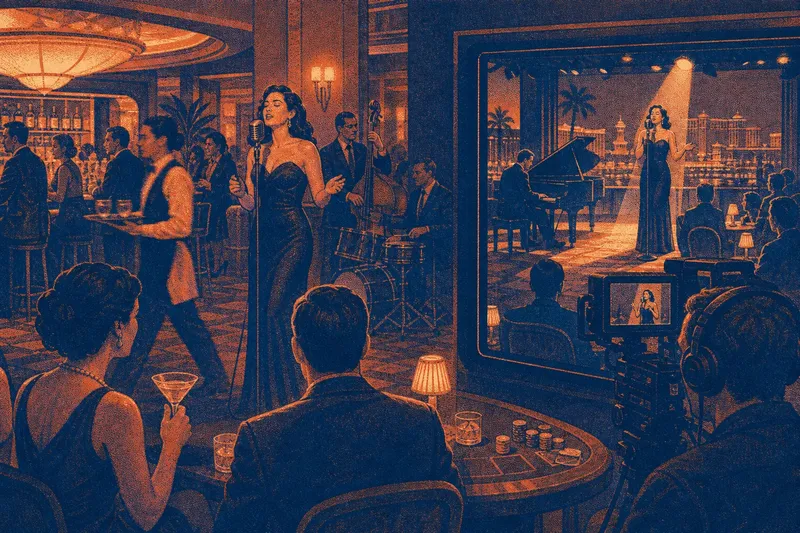
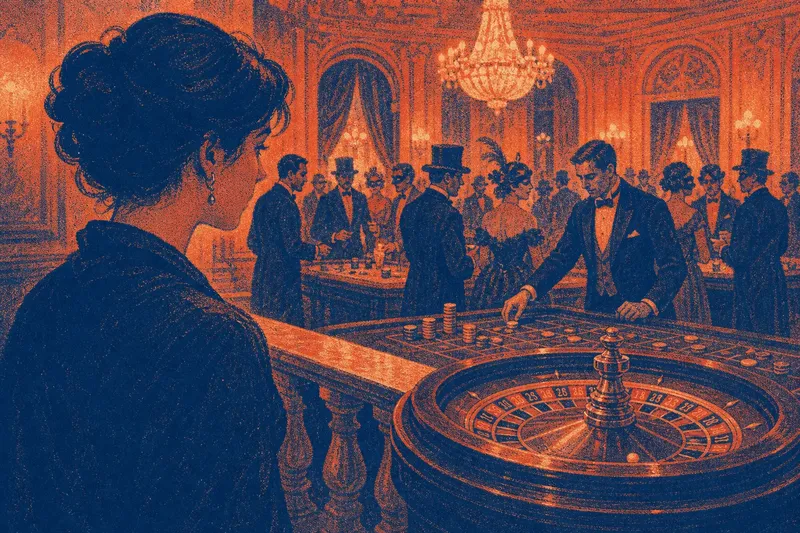
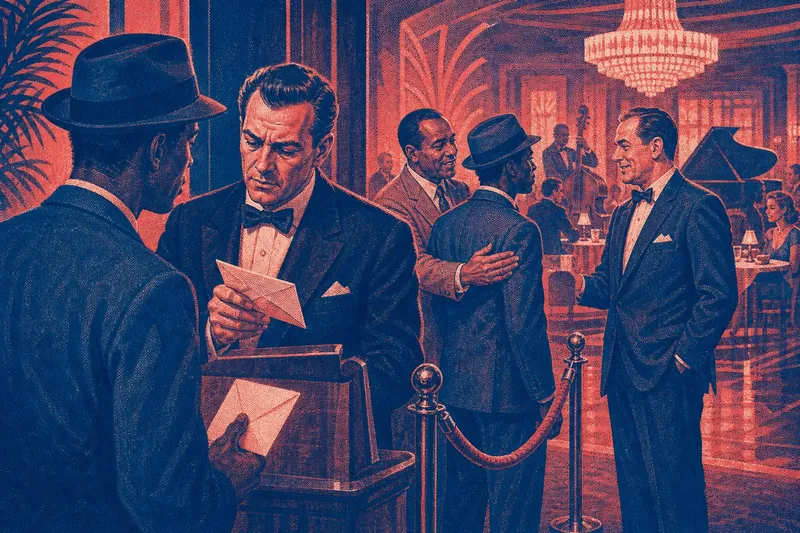
The Casino Entrance as a Theatrical Threshold
See how casino entrance design can shape a visitor’s first impression through lighting, sound, and material choices while keeping circulation clear and legible.
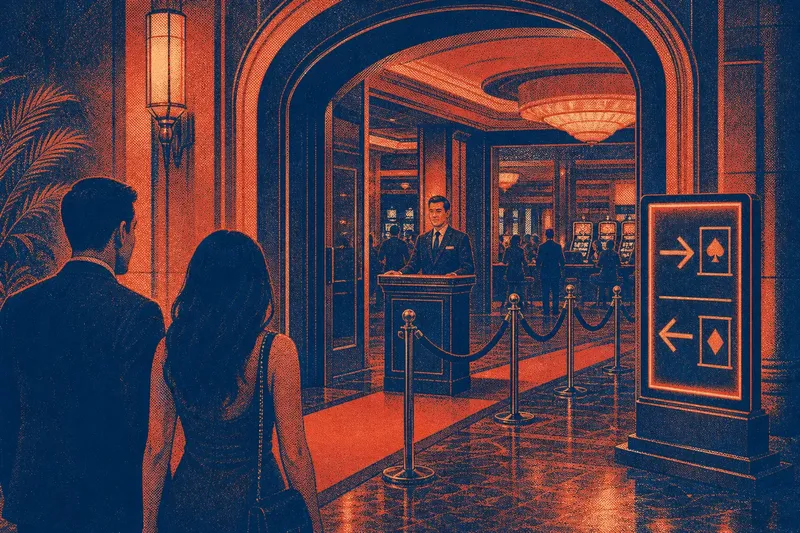
The most common mistake in casino entrance design is treating the doorway as decoration: add polished stone, a bright sign, perhaps a velvet rope, and assume the atmosphere will follow. The result can be an expensive-looking passage that leaves visitors unsure where to go. Stagecraft offers a more useful approach: choreograph the practical actions at the entrance, from arriving and orienting to finding a host or choosing a route.
Arrival as choreography
An entrance is a working part of the venue, not simply a frame around the room beyond. People may arrive in groups, stop to consult a sign, wait for someone, or need directions. Design has to accommodate those actions without turning the doorway into a small theater of avoidable hesitation.
Start by listing the entrance’s actual jobs. These might include welcoming guests, identifying the venue, providing directions, managing a queue, and keeping staff access distinct from visitor circulation. The list helps separate functional requirements from decorative impulses. A brass rail, for instance, earns its place if it organizes a waiting line; otherwise it is just a brass rail with strong opinions.
Signals and choices
Signs, lighting, and staff positions can guide behavior without making the entrance feel like an instruction manual. Use signs for decisions visitors must make, such as where to check in or which route leads to an event space. Keep decorative lettering from competing with essential directions, and check that signs remain readable from the places where people need to act.
Lighting should support those tasks. A focused pool of light can make a host stand easier to locate, while even illumination helps visitors read signs and see the route ahead. Avoid using a dramatic dark patch where people must pause to make a decision. The eye may enjoy mystery; the person looking for a check-in desk generally does not.
Sound also affects how an entrance functions. A loud musical cue can announce a transition, but it may make spoken directions harder to hear. If the entrance includes a greeting or ticket check, consider how music, mechanical noise, and conversation overlap. Treat sound as part of the operating environment rather than a layer added after the design is finished.
Clear circulation
Map the paths between the entrance, host position, waiting area, and main visitor routes. Keep doors and signs visible from the approach, and avoid placing a display or decorative feature where arriving guests naturally stop. Circulation is easier to understand when the route has a clear purpose and does not cross staff movements unnecessarily.
Imagine a venue with a single entrance, a host stand, and a sign pointing to two event rooms. Suppose the sign is placed behind the usual waiting line. The design team could move it beside the host stand and shift the line marker away from the doorway. The expected observable result is that arriving visitors can read the directions before reaching the host, while the entrance remains open for people coming and going. This invented situation illustrates a layout decision, not a claim about measured behavior.
Entrance design checks
Use a simple walk-through to connect each observation to a design decision. If the result is unclear, revise the layout or ask a qualified accessibility professional to assess relevant access requirements.
- Check the approach: If the main entrance is hard to identify from the public route, then improve its sign or lighting; otherwise, keep the existing cue and review the next decision point.
- Check the host position: If arriving guests cannot see where to ask for help, then relocate the stand or add a clear sign; otherwise, avoid adding another competing marker.
- Check the waiting area: If a queue blocks a door or sign, then move the waiting area or change its boundary; otherwise, preserve the clear route.
- Check the directions: If visitors must choose between routes but cannot tell where each leads, then revise the wording or placement; otherwise, keep the signs concise.
- Check the lighting: If a sign, step, or host position falls into shadow, then adjust the fixture or its aim; otherwise, avoid adding brightness without a functional reason.
- Check the sound: If spoken directions are difficult to hear over music or equipment, then adjust the source or its placement; otherwise, keep the sound level and arrangement under review during normal operations.
- Check staff movement: If staff must repeatedly cross the visitor route to reach their work area, then revise the access path; otherwise, keep the current division of movement.
Which entrance choices help?
What should visitors see first?
They should be able to identify the entrance’s immediate purpose, such as where to check in or ask for directions. Decorative elements can add character, but they should not obscure the first useful choice.
How can a small lobby stay orderly?
Give waiting guests a defined place that does not block doors, signs, or the main route. Keep the host position visible and limit the number of competing visual cues.
Where should directional signs go?
Place each sign before the point where a visitor must choose a route, and make its wording specific to that decision. A sign that becomes readable only after someone has passed the turn is an annotation, not guidance.
What does theatrical design contribute?
It can give the arrival sequence a deliberate rhythm through lighting, sound, materials, and staff placement. The design is doing useful work when it supports orientation and welcome without turning routine movement into a puzzle.
One last adjustment
Casino entrance design is strongest when its visual character and daily operation agree. A polished host stand is not much help if the queue hides it, and a clever sign is wasted if visitors encounter it after the decision point. Walk the route from the street as a first-time guest, then check whether each visible cue answers the next practical question.